
Something new has taken shape at the Nairobi Terminal and is set to change how fuel is moved. Known primarily as a storage hub, the Nairobi Terminal (PS 10) has completed a major operational upgrade: the introduction of a bottom-loading system. The facility is now awaiting commissioning soon, marking a bold step forward for KPC as the terminal prepares to join Eldoret, Kisumu and Nakuru in adopting a safer, faster and more efficient way to load fuel trucks. The shift is more than an operational upgrade; it is a strategic move. The initiative was identified as a key opportunity under KPC’s Corporate Strategic Plan: Vision 2025, which seeks to modernise operations, enhance safety and improve delivery. By aligning infrastructure development with long-term goals, KPC is not only improving current systems but also laying the foundation for a future-ready organisation.
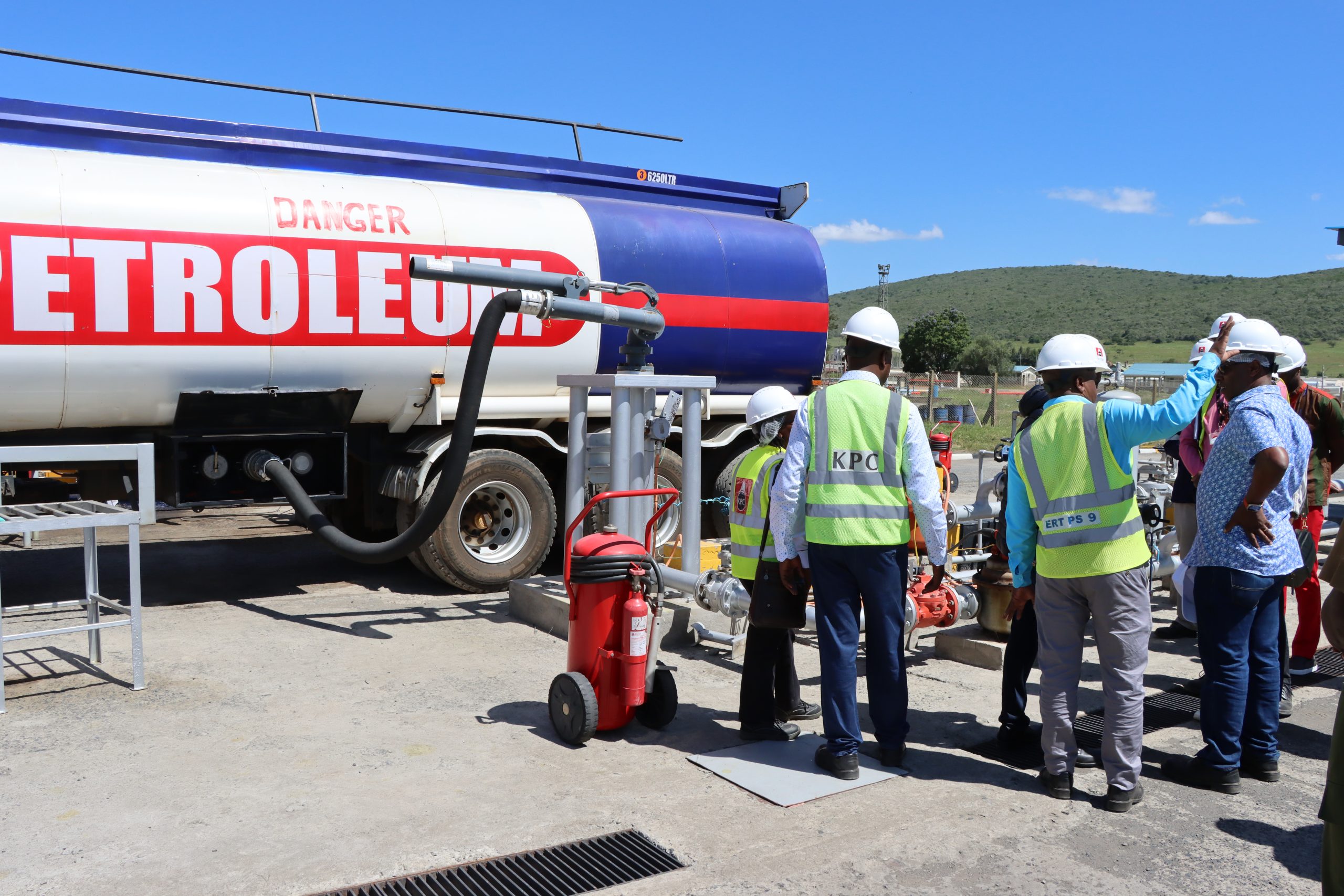
Unlike traditional top loading, where operators must climb onto tankers to load fuel manually, exposing them to fall risks and potential static-related fires, bottom loading allows operators to remain safely on the ground throughout the process. It also supports high-pressure loading, which helps reduce turnaround times at the bays. “With bottom loading, operators stay on the ground, where they are safest,” said Eng. Omolo, Project Chairperson and KPC Chief Civil Engineer.
Bottom loading is fast becoming the industry standard because it reduces risk and increases efficiency, and KPC is proud to be at the forefront of this change. While the Nairobi Terminal has long served as a key fuel storage facility, the introduction of bottom loading marks a first in its operational history. Once commissioned, the facility will support a shared loading system for multiple Oil Marketing Companies (OMCs), significantly elevating its role in the national petroleum value chain. The project was rolled out in three phases: Civil Works, Material Supply and Equipment Installation. All three phases have now been completed, and the facility is awaiting commissioning soon.
What makes this project stand out is its reliance on internal talent. Much of the work was carried out by KPC staff from various depots, bringing expertise in civil, mechanical, electrical, instrumentation, corrosion protection and ICT disciplines. “Using in-house manpower is not just cost-effective; it builds pride in the work and a sense of ownership,” added Eng. Omolo. This cross-departmental effort highlights the depth of talent within KPC and demonstrates how internal collaboration can drive large-scale transformation. Once commissioned, the facility will have six dedicated loading bays: three for Motor Spirit Premium (MSP) and three for Automotive Gas Oil (AGO).
Safety and sustainability have been central pillars of the project from the beginning. The new system complies with National Environment Management Authority (NEMA) and Energy and Petroleum Regulatory Authority (EPRA) regulations. Key features include spill containment systems, foam-based fire suppression and a hydrant firefighting system. These systems ensure operational resilience while minimising environmental impact, aligning with KPC’s commitment to responsible energy logistics.
Like any major infrastructure upgrade, the bottom-loading project encountered some hurdles. Early progress was delayed by unusually heavy rainfall, and the process of securing regulatory licences took longer than expected. With the main works now complete, attention has shifted to final readiness activities, including preparations for commissioning and measures to manage truck inspection flows once operations begin. KPC is addressing these operational requirements through improved traffic management and streamlined inspection processes.
As the Nairobi Terminal awaits commissioning of its completed bottom-loading facility, formal training will be rolled out to support safe and efficient operations. Long-term plans are in place to phase out top loading entirely, making bottom loading the company-wide standard for fuel truck operations.
With the completed facility awaiting commissioning, Nairobi is now set to join Eldoret, Kisumu and Nakuru in this operational transformation. KPC is not only advancing its infrastructure but also setting new benchmarks in fuel logistics. The bottom-loading initiative is more than a technical upgrade; it is a bold statement of intent. It signals how KPC is engineering a safer, faster and more cost-effective future for petroleum logistics in Nairobi and beyond.